Rui de Paula Vieira de CastroAssociate Scientist, Jefferson Institute of Bioprocessing (JIB)
Vielseitigkeit für zuverlässige Forschung
INFORS HT hat einen guten Ruf für hochwertige und langlebige Produkte. Unsere Inkubationsschüttler sind so konstruiert, dass sie den Anforderungen des Dauerbetriebs standhalten und Zuverlässigkeit und gleichbleibende Leistung über lange Zeiträume gewährleisten.
INFORS HT Inkubationsschüttler bieten die erforderliche Vielseitigkeit für eine breite Palette von Anwendungen, von der genetischen Forschung bis hin zu Routineaufgaben im Labor. Dank der präzisen Kontrolle von Temperatur und Schüttelhub können Sie darauf vertrauen, dass Ihre Ergebnisse jedes Mal konsistent und reproduzierbar sind.
Von der Installation und Schulung bis hin zur Wartung sorgt INFORS HT dafür, dass Ihre Inkubationsschüttler mit Höchstleistung arbeiten. Unser engagiertes Serviceteam bietet zeitnahe und sorgfältige Unterstützung, sodass Sie sich beruhigt auf Ihre Forschung konzentrieren können.
INFORS HT hat einen guten Ruf für hochwertige und langlebige Produkte. Unsere Inkubationsschüttler sind so konstruiert, dass sie den Anforderungen des Dauerbetriebs standhalten und Zuverlässigkeit und gleichbleibende Leistung über lange Zeiträume gewährleisten.
INFORS HT Inkubationsschüttler bieten die erforderliche Vielseitigkeit für eine breite Palette von Anwendungen, von der genetischen Forschung bis hin zu Routineaufgaben im Labor. Dank der präzisen Kontrolle von Temperatur und Schüttelhub können Sie darauf vertrauen, dass Ihre Ergebnisse jedes Mal konsistent und reproduzierbar sind.
Von der Installation und Schulung bis hin zur Wartung sorgt INFORS HT dafür, dass Ihre Inkubationsschüttler mit Höchstleistung arbeiten. Unser engagiertes Serviceteam bietet zeitnahe und sorgfältige Unterstützung, sodass Sie sich beruhigt auf Ihre Forschung konzentrieren können.
Halten Sie Ihren Schüttler in Bestform
Mit der INFORS HT Kampagne zur Schüttler-Modernisierung und Wartung bleibt Ihr Inkubationsschüttler leistungsfähig. Entdecken Sie Upgrade-Optionen und Servicepakete, die Ausfallzeiten minimieren, Kulturen schützen und Ihnen ermöglichen, sich auf Ihre Forschung zu konzentrieren.
Gleichbleibende Luftqualität bei ununterbrochenem Wachstum
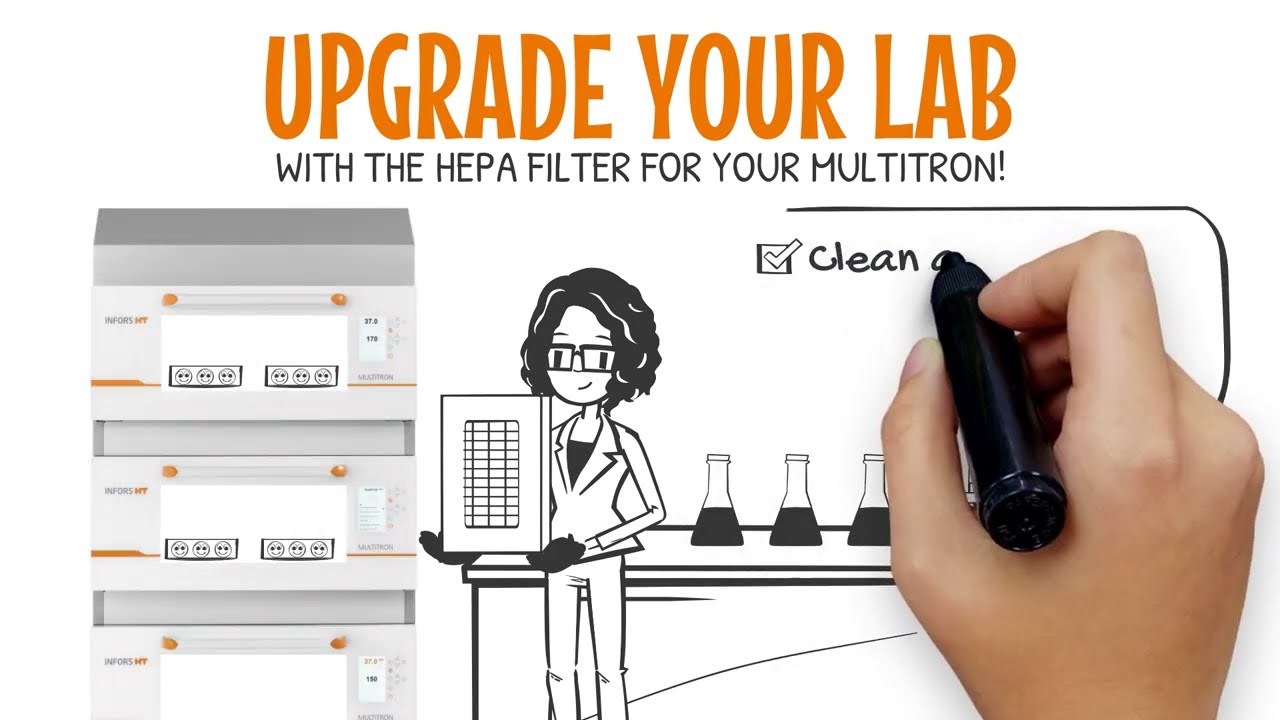
Sorgen Sie für kontaminationsfreie Bedingungen, ohne Ihre Forschung zu unterbrechen. Mit dem HEPA-Filtersystem, das für eine kontinuierliche Luftreinigung sorgt und 99,995 % der in der Luft befindlichen Partikel auffängt, können Sie eine saubere Umgebung aufrechterhalten, die zuverlässige, reproduzierbare Ergebnisse unterstützt. Die Luftqualität der Klasse 10 (ISO 4) wird innerhalb von 3 Minuten nach dem Schließen der Tür wiederhergestellt, so dass Ihre Kulturen geschützt sind und Ihre Forschung ohne zusätzliche Ausfallzeiten oder Dekontaminationszyklen fortgesetzt werden kann.
Die Daten in der Application Note bestätigen diesen Schutz während des aktiven Einsatzes und zeigen die Kontaminationskontrolle in exponierten Medien und auf internen Oberflächen während der Kultivierung von Bakterien und Säugetierzellen in offenen Gefäßen.
Erster Schüttler mit ACT-Label: Multitron – hergestellt in Europa
Der Multitron Inkubationsschüttler, hergestellt in Bottmingen, Schweiz, ist der erste Schüttler, der das ACT Label (Environmental Impact Factor Label) erhalten hat und damit sein nachhaltiges Design sowie seine Umweltverantwortung unter Beweis stellt. Entwickelt für hohe Leistung bei reduziertem ökologischen Fussabdruck, setzt der Multitron neue Maßstäbe für nachhaltige Laborausrüstung und gewährleistet einen umfassenden Support für mindestens 10 Jahre, einschliesslich Anleitung zur verantwortungsvollen Entsorgung.
Wichtige Highlights:
- Verbraucht nur 3,5 kWh pro Tag, getestet gemäß dem Energie-Testprotokoll von My Green Lab*.
- Hergestellt in Bottmingen, Schweiz, in einer ISO 14001-zertifizierten und EU-RoHS-konformen Einrichtung, frei von bedenklichen Chemikalien.
- 60% recycelter Anteil im Eisengewicht, was zu nachhaltiger Produktion beiträgt.
- 100% recycelte Polyurethan-Schaumstoffeinlage, reduziert Verpackungsmüll.
* Anwendungsfall: 37 °C Sollwert, 125 bis 135 min⁻¹, 25 mm Schüttelhub, 23 Stunden Betrieb einschließlich Aufheizphase; ohne Kühlung: 1 Stunde Standby; mit Kühlung: 1 Stunde bei 10 °C Sollwert.
Stimmen von Wissenschaftler, die mit INFORS HT arbeiten
Nicole Lapuyade-BakerSenior Research Associate at CytomX Therapeutics
Matthew HigginsDepartment of Biochemistry at the University of Oxford, UK
Manfred Sander, Dipl.-Ing. (FH)Specialist Department of Equipment Management, Universitätsklinikum Erlangen
Ähnliche Publikationen
Alle PublikationenResearchers from the KTH Royal Institute of Technology (Sweden) used enzyme-constrained genome-scale models (ecGEMs) to redesign the anaerobic metabolism of Saccharomyces cerevisiae for the co-production of 2,3-butanediol and glycerol. Seed cultures were prepared using the INFORS HT Minitron incubator shaker before fermentation experiments, enabling validation of model predictions through bioreactor cultivation and proteomic analysis. The study demonstrated that engineered yeast cells could achieve high glucose uptake rates by reallocating cellular resources toward glycolysis, highlighting the potential of ecGEMs as a powerful tool for metabolic engineering and strain development.
Researchers from the Department of Chemical & Biomolecular Engineering and the Department of Electrical and Computer Engineering at the University of Delaware (USA) developed a transcriptomic workflow called MemorySeq to identify stress-responsive biomarkers in Chinese hamster ovary (CHO) cells exposed to manufacturing-related stress conditions. Using the INFORS HT Minitron incubator shaker for controlled CHO cell cultivation, the study identified 199 genes with heritable transcriptional variability linked to stress adaptation, apoptosis regulation, and metabolic pathways. These findings provide new insights into engineering more stress-tolerant CHO cell lines for improved biopharmaceutical manufacturing performance.
Researchers at the Institute of Environmental Biotechnology, BOKU University in Austria developed a sustainable method to recycle blended wool-polyester textile waste using enzymatic hydrolysis followed by microbial valorization. Using the INFORS HT Multitron Standard incubator shaker, they cultivated Chlorella vulgaris and Rhodotorula mucilaginosa on recovered wool hydrolysates, producing valuable bioproducts including natural pigments and lipids. This innovative process transforms textile waste into renewable resources for dyes and biofuels, supporting the circular bioeconomy.
Researchers from the KTH Royal Institute of Technology (Sweden) used enzyme-constrained genome-scale models (ecGEMs) to redesign the anaerobic metabolism of Saccharomyces cerevisiae for the co-production of 2,3-butanediol and glycerol. Seed cultures were prepared using the INFORS HT Minitron incubator shaker before fermentation experiments, enabling validation of model predictions through bioreactor cultivation and proteomic analysis. The study demonstrated that engineered yeast cells could achieve high glucose uptake rates by reallocating cellular resources toward glycolysis, highlighting the potential of ecGEMs as a powerful tool for metabolic engineering and strain development.
Researchers from the Department of Chemical & Biomolecular Engineering and the Department of Electrical and Computer Engineering at the University of Delaware (USA) developed a transcriptomic workflow called MemorySeq to identify stress-responsive biomarkers in Chinese hamster ovary (CHO) cells exposed to manufacturing-related stress conditions. Using the INFORS HT Minitron incubator shaker for controlled CHO cell cultivation, the study identified 199 genes with heritable transcriptional variability linked to stress adaptation, apoptosis regulation, and metabolic pathways. These findings provide new insights into engineering more stress-tolerant CHO cell lines for improved biopharmaceutical manufacturing performance.
Researchers at the Institute of Environmental Biotechnology, BOKU University in Austria developed a sustainable method to recycle blended wool-polyester textile waste using enzymatic hydrolysis followed by microbial valorization. Using the INFORS HT Multitron Standard incubator shaker, they cultivated Chlorella vulgaris and Rhodotorula mucilaginosa on recovered wool hydrolysates, producing valuable bioproducts including natural pigments and lipids. This innovative process transforms textile waste into renewable resources for dyes and biofuels, supporting the circular bioeconomy.
Interessiert an einem INFORS HT Inkubationsschüttler?
Bitte füllen Sie das untenstehende Formular aus, um mit einem unserer Vertriebsmitarbeitenden zu sprechen.